










Okemos, Michigan Cosmetic Surgeon
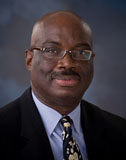
William W. Ehrlich, M.D., F.A.A.C.S. was born in Detroit, and attended the University of Michigan in Ann Arbor for undergraduate and medical school. He received his M.D. in 1979, then completed a "rotating" internship and residency in ophthalmology at Henry Ford Hospital in Detroit, finishing in the spring of 1983. After a year of private practice experience (with a position as a Clinical Instructor in the Department of Ophthalmology at the University of Michigan Medical School) he began a Fellowship in Orbital & Oculoplastic Surgery at the Albany Medical Center in Albany, New York with Gregory Krohel, M.D. In 1984, he began a preceptorship in orbital & oculoplastic surgery at Moorfields Eye Hospital in London, England with John Wright, M.D. and Richard Collin, M.D. In 1985, he became the first fellowship trained ophthalmic plastic & orbital surgeon in mid-Michigan, opening a private solo practice. In 1987, he joined Lansing Ophthalmology, becoming President of the group in 1995. In 1997, Dr. Ehrlich founded Trillium Laser, Cosmetic & Reconstructive Surgery.

Dr. Ehrlich has lived and trained for extended periods in Ann Arbor, Detroit, Boston, Albany, and London. He has received further surgical training at intensive courses in New York City (surgical anatomy and cosmetic facial surgery), Copper Mountain, Colorado (dermatological and facial surgery), Dayton/Atlanta/San Francisco/New Orleans/Detroit /Indianapolis/Springfield (lasers), Capistrano Beach & Detroit (liposuction), Washington, D.C. (facelift), and Beverly Hills & Burbank (endoscopic brow lift), Newport Beach/Oklahoma City (breast augmentation), and many others.
His surgical experience encompasses over 13,000 ophthalmic plastic, orbital, facial, laser, and cosmetic surgeries. As principal surgeon, he has "logged" over 19,000 hours in surgery and many more teaching, learning, and assisting others.
He has helped to pioneer many new cosmetic procedures in Michigan, including laser skin resurfacing, laser hair removal, functional and cosmetic Botox use, "no incision" lower eyelid surgery, true tumescent liposuction, laser tattoo removal, salt MicroDermabrasion, aesthetic skin care in a cosmetic practice, and minimal incision facelifts using tumescent anesthesia and facial liposuction.
He is currently an Assistant Clinical Professor of Surgery at the College of Human Medicine, Michigan State University, in East Lansing. He is also a lecturer at the College of Osteopathic Medicine at MSU.
In 2000, Dr. Ehrlich was elected by his cosmetic peers as a Fellow of the American Academy of Cosmetic Surgery. At present, his practice consists of 80% cosmetic surgery and 20% reconstructive surgery. He continues to lecture and learn. Special interests include laser skin and hair treatments, true tumescent liposuction, minimal incision face & neck lifts, breast augmentation without scars, and eyelid surgery of all types.
Dr. Ehrlich is a Cosmetic Surgeon.
(Is that the same as a Plastic Surgeon?)
As interest in cosmetic surgery increases exponentially, huge amounts of money are being spent, throughout the world, for such surgery. Whenever the "potential for economic return" for any medical service is substantial, providers of that service (physicians & surgeons) react predictably. Three things happen: Providers of the surgery or service increase, "battle lines" are drawn, and "turf wars" begin, in an effort to limit the "supply" of surgeons who can or could be doing the growing and/or more lucrative procedures. At present, the plastic surgeons society (ASPRS) is spending millions on a marketing effort designed to make the public believe that only plastic surgeons are qualified to do any type of cosmetic surgery. Not only is this patently false, their efforts are fraught with untruths, and are, in fact, an unlawful attempt to "restrain trade."
Plastic surgery is a "generic" term defined as "concerned with or pertaining to the remedying or restoring of malformed, injured, or lost parts." This defines reconstructive plastic surgery (which Dr. Ehrlich has been performing for 20 years) , but does not mention cosmetic surgery, which can be defined as surgery "serving to beautify; impart or improving beauty, especially of the complexion." Reconstructive surgery restores lost function, often improving appearance as a secondary benefit. Cosmetic surgery improves the appearance of a body part or area that is functioning normally, but is an aesthetic concern for the patient. For some patients and surgeries, these two goals are intertwined, and are difficult to psychologically separate. A "want" is easily transformed to a "need." Economically, the definition is very clear: Reconstructive surgery is frequently covered by insurance, while cosmetic surgery is rarely covered.
Most "plastic surgeons" complete a residency in plastic surgery (1-3 years of general surgery training followed by 2-4 years of plastic surgical training) on all areas of the body. Depending upon the residency, they typically have very little cosmetic surgery exposure. Some have a significant amount. They are then "board certified" in plastic surgery. How much, or how little, cosmetic surgery they practice depends upon many factors. Cosmetic surgeons come from many different backgrounds, typically ear , nose and throat (ENT), ophthalmology, dermatology, and oral surgery. In general, they are every bit as capable of performing excellent cosmetic surgery as any "plastic surgeon," sometimes more so.
Dr. Ehrlich was fellowship trained as an ophthalmic plastic and reconstructive surgeon, and has spent over 19,000 hours in cosmetic and reconstructive surgery since 1985. He has spent countless hours training in the latest laser and cosmetic techniques. He is one of the Midwest's pioneers in laser facial resurfacing, Botox use, laser hair removal, micro-dermabrasion, cosmetic eyelid surgery, true tumescent liposuction, minimal incision face and neck lifts, and laser tattoo removal. He is a Fellow of the American Academy of Cosmetic Surgery, a diverse group of surgeons who are experts in cosmetic surgery. Despite his depth and breadth of experience in cosmetic surgery, some "plastic surgeons" have an irrational resentment toward him (and many others) performing what they erroneously believe to be "their surgery." This resentment is a natural (albeit illogical) emotion which is "economically motivated." Professional concerns for the patients' welfare should be the primary focus of all physicians and surgeons, but medicine has become a business.
Ophthalmic plastic and reconstructive surgery evolved during World War II. One of the founding members of the plastic surgeons' society was an ophthalmologist, a fact they rarely admit. Many of the "plastic surgery" operations (now standards in facial plastic surgery textbooks) were invented by ophthalmologists. Dr. Ehrlich was board certified in ophthalmology before his fellowship and preceptorship in "oculoplastic & orbital" surgery. For over 18 years, his practice has been almost exclusively cosmetic & reconstructive surgery. As an ophthalmogist, he is uniquely qualified to evaluate laser surgery and laser technology, having used almost every type of laser since 1980, and being certified on at least six types of lasers. His expertise and interest in cosmetic surgery results from this background. Very few "board certified plastic surgeons" have his depth and breadth of experience in laser surgery and upper facial cosmetic surgery. This is not a reflection of their abilities (which are usually excellent) it is simply a result of Dr. Ehrlich's training and experience.
So, the question: "Is Dr. Ehrlich a plastic surgeon?" can be answered in two ways, both correct. No, he is not "board certified in plastic surgery," since he did not complete a plastic surgical residency. Yes, he is, since he is "board certified" in ophthalmology, fellowship and preceptorship trained in ophthalmic plastic and reconstructive surgery, and trained in many current techniques in plastic and cosmetic surgery. After 20 years and 19,000 hours performing cosmetic and reconstructive surgery, he performs reconstructive surgery, and is a cosmetic surgeon. You must discover which specific surgeon is best suited to treat your cosmetic or functional concerns. Choosing a surgeon involves verifying his/her credentials, capability to perform the surgery you are considering, and finding someone who is a excellent technician, approachable confidant, unselfish practitioner, and can determine (with your help) which surgery is best for you. We will help you in any way that we can.